| |
CHAMBER WORKS
A Golden Celebration (2014)
violin, cello, piano
Duration: ca. 8:00
Published by Kenter Canyon Music (ASCAP)

Commissioned by Sandra Wiese, member of the Onyx Circle, in celebration of the 50th Anniversary of the Mu Phi Epsilon Foundation. World Premiere at the 2014 Mu Phi Epsilon Convention in Sacramento, CA. on July 30, 2014 with former winners of the Mu Phi Epsilon International Competition Jorge Avila, violin, Marek Szpakiewicz, cello and Yukiko Sekino, piano performing the Premiere. I was honored to be the guest speaker at the Mu Phi Epsilon Foundation's 50th Anniversary luncheon and to give a Workshop during the convention.
Acadian Dreams (2016)
for flute and piano
Duration: ca.6:30
Published by Kenter Canyon Music (ASCAP)
"Acadian Dreams" was commissioned by flutist, Rebecca Jeffreys, in honor of her father whose lineage is from Acadia. This one movement work is programatic and tells, through music, the history of the Acadian people immigrating from France to Nova Scotia in the 1600s. Longfellow composed his epic poem, "Evangeline", based on the the Acadian people, and it ends in the contemporary influence of Zydeco music in New Orleans. "Acadian Dreams" is published and can be purchased through Kenter Canyon Music (ASCAP). It is also available through Theodore Front Music Literature and FluteWorld.
Acadian Dreams NOW AVAILABLE FOR VIOLIN AND PIANO (2018)
Across the Cs (2015)
for flute quintet: piccolo, 2 C flutes, alto flute, bass flute
Duration: ca.7:00
Published by Falls House Press
May also be purchased through FluteWorld
Commissioned by the wonderful Norwegian group, 5 på Tvers/ 5 Across for the 2015 NFA convention in Washington, DC. Members: Mari Sundsaasen Innervik, Anne Hveding, Linn Annett Ernø, Ragnild Døsen and Henriette Wie Flaig.
Since California is many seas apart from Norway, the title of the piece is a takeoff of the fact that flutes, in general, are C instruments and we are seas apart. The piece is programmatic in nature, starting with the ensemble blowing across their instruments and then slowly finding their way across the waves and over to their native country. This piece should have a strong bass flute player and is definitely worth the effort!
Americana Quartet (2008)
flute, violin, viola, cello
Duration: ca.12:00
Published by Kenter Canyon Music (ASCAP)
Commissioned by Chamber Music Palisades (Delores Stevens and Susan Greenberg, co-founders and directors) in 2008, Americana Quartet began its development when I was fortunate to have been granted a residency at the Ucross Foundation in Wyoming in the fall of 2007. An idyllic setting for creative thought, the environment at Ucross is perfectly suited to freely allow thoughts to gather, develop, throw away, discover, re-discover, blossom and develop. In addition to the blissful energy of discovery, the Ucross Foundation is situated in the high mountains/desert plains of North Central Wyoming. Antelopes and deer freely roam; birds soar and, unfortunately, sometimes hunters hunt. Through the combination of experiences, seeds of this work developed and were formed The western/ Appalachian feel of the fiddle tune and rhythmic playfulness of the piece emerged. Then, from Wyoming and its idyllic setting, I went to New York with its jazz flavored energy and influences. What could be more American than Boogie Woogie and Appalachian flavors. Hence, Americana Quartet came into being. The works is approximately 12 minutes long and can be performed in sections, although it is preferable to perform it in its entirety for the full Americana experience
Animalogy (2006)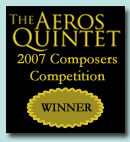
Woodwind Quintet for flute, oboe, clarinet, horn, bassoon
Commissioned by NEA and ACF
Duration: ca. 7:30
Published by Kenter Canyon Music (ASCAP)
ANIMA-in Jungian psychology, the true inner self as opposed to the outer persona.
Animalogy (n.): The not-very-serious study of the many varieties of animals found in their natural habitats in and around the
Kenai Peninsula in Alaska as viewed through the eyes and ears of this human animal/composer during her myriad adventures
throughout the area. A musical portrait of the various creatures living and procreating in the Kenai Peninsula including, but not
limited to, the many varieties of birds, bald eagles, bears, moose(s), sheep, wolves, and sea life that inhabit this spectacular
piece of real estate. It is up to you, the listener and performer, to catch glimpses of the various animals as they go about their
daily tasks and pleasures.
Animalogy was commissioned in 2006 for the Continental Harmony Project, Alaska,
generously funded by the National Endowment for the Arts and The American Composers Forum. It is the middle movement of An Alaskan Symphony that is scored for full orchestra, woodwind quintet and choir and orchestra. Animalogy was premiered at The Pratt Museum in Homer, AK June 16th, 2006. The complete Alaskan Symphony was premiered in Homer and Kenai, Alaska in April of 2007 by the Kenai Peninsula Orchestra and choirs under the direction of Mark Robinson. Animalogy is a winner of the 2007 Aeros Quintet Competition and will be performed in Carnegie Hall's Zankel Hall on May 5, 2008.
Bassoonet Boogie (2003)
Duet for Clarinet and Bassoon
Duration: approx 3:50
Published by Kenter Canyon Music (ASCAP)
A playful and deliciously fun piece for clarinet
and bassoon with an ending
that will surprise and amuse. Boogie Woogie for the new Millennium.
BassooNova (2013)
Solo Bassoon
Duration: approx 5:00
Published by Kenter Canyon Music (ASCAP)
Commissioned by Andrew Moore, a senior at Miami University at Oxford, Ohio, this unaccompanied bassoon piece has the feel of a bossa nova and should delight players and audiences. Andrew premiered the work in his senior recital in the spring of 2013.
Between The Dark And Daylight (2007)
Flute, violin, clarinet, cello, piano
Commissioned by Pacific Serenades
Duration: approx 18:00
Published by Kenter Canyon Music (ASCAP)
The three movements are titled:
1. Nightdreams |
|
|
Purchase all 3 movements and save! |
2. Lullaby |
|
|
|
3. Daydreams |
|
|
|
I am deeply indebted to Ursula Krummel for commissioning this work and to Mark
Carlson, Music Director of Pacific Serenades, for the wonderful opportunity to
compose this work for his award-winning chamber music series. In preparation
for composing Between the dark and daylight, I listened to Cds of lullabies and
nursery songs from around the world. Besides the universality of the message,
I was fascinated to find that at the most basic level, the musical intervals
found in the earliest children’s songs are very similar. When a child cries
out to its mother, it uses the downward minor third to cry Mama. Those notes,
(I think of G for Good, E for Earth) recur throughout the entire work. The work,
scored for flute, violin, viola, cello and harp, is in three sections (or movements)
although I think of it as through composed. The first section, Nightdreams, begins
with the descending minor third interval played by the viola (I love inner voices)
and builds as each instrument enters to a dramatic high pitch. It then begins
to move through a kaleidoscope of cultures. A pentatonic scale has the feeling
of Chinese voices; tango rhythms appear to take the listener to South American
countries; snippets of other cultures take shape and meld into the next. The
second section, Lullaby, is a gentle song featuring the voices of the individual
instruments. As my former musical life included being a singer, I ask myself
if each musical line can be sung and if so, then it follows that it should sound
good on an instrument. Although I wrote the notes, the shape and intention of
the music can only come to life through the collaborative process of the musicians
interpreting what I have written and to that end, I am extremely fortunate to
have such marvelous musicians premiering my work. The third and final section,
Daydreams, begins again with the minor third interval and weaves through a playful
variety of children’s tunes from European countries. There’s even
a bit of Brahms lullaby thrown in. It will be fun to see how many tunes the audience
can recognize as they fly by. Composing this work surprised me as it progressed.
I thought it would be a serious statement on the future that looms for our children’s
children. As it turned out, there is a great deal of hope and frivolity. Go figure!
By the way, sometimes titles of pieces come easily (that’s when the piece
seems to “write itself”). Other times, there is angst over what the
title should be. That was the case with this piece until I remembered that I
had sung and recorded a beautiful Charles Ives song titled “The Children’s
Hour’, and the first line of the poem by Henry Wadsworth Longfellow is, “Beyond
the dark and the daylight”.
Boundaries 3 (Rev. 2013)
String Quintet for 2 vln, vla, cello, bass
Duration: approx 5'
Published by Kenter Canyon Music (ASCAP)
Written for and premiered by The Salieri String
Quintet in Seattle, WA
A strong, bold, tonal work which had its genesis from a boundary
dispute I was having with a neighbor. The piece is also appropriate
for string orchestra.
Boundaries 2 (2002)
Piano Trio for vln, cello, pn
Duration: approx 5:04
Clarinets Boogie (2005)
Duet for Clarinet and Bass Clarinet
Duration: 4:00
Transcribed from Bassoonet Boogie, Clarinets Boogie is a playful and
deliciously fun piece for clarinet and bass clarinet with an ending
that will surprise and amuse. A real audience pleaser.
Circadia
(2002)
Three movements for Bassoon and Piano
Commissioned by Carolyn Beck
Duration: approx 18:00
Published by Kenter Canyon Music (ASCAP)
Circadia is also available for Baritone Saxophone and Piano (2009)
Circadia is now available for Alto Saxophone and Piano (2016)
1. Cycles |
|
| Commissioned
by Carolyn Beck, "Circadia",
a sonata for bassoon and piano in three movements, refers to the
daily pulse, rhythms and cycle of activities observed in many living
organisms. The first movement, "Cycles", is a
wild and disjointed chase between the instruments. The
cyclic
rhythms vary
between a triplet motif with the bassoon both chasing and
being chased by the piano, and a more jazzy section with
the two
instruments figuratively and literally playing with one
another. The movement
ends with the instruments playing the original motif ensemble. |
| |
2. Nightfall |
|
|
Since the horrible events of 9/11, our world seem to be
moving with harrowing speed toward the precipice of Armageddon.
The second movement, "Nightfall", is a reflective, melancholy and brooding
piece which mirrors the descent from day into night. Finally "Spring
Ahead" (which refers to the change to daylight savings
time in the spring) is a ray of hope in which bassoon and
piano have
fun cavorting and playing tricks on one another. |
| |
3. Spring Ahead |
|
|
Lori Alexander, composer writes:
"Your piece was rich with ideas... very
full harmonically, and melodically:... A very, very substantial,
moving and
impressive work. Congratulations!" |
Circadia
(2016)
Three movements for Alto Saxophone and Piano
Duration: approx 18:00
Published by Kenter Canyon Music (ASCAP)
Circadia is also available for Bassoon and Piano and Baritone Saxophone and Piano (2016)
The three movements are titled:
1. Cycles |
|
Originally commissioned
by Carolyn Beck for bassoon and piano, this version of "Circadia" for baritone saxophone and piano was performed by Wayne Leechford at the World Saxophone Congress in St. Andrews, Scotland, July 2012. "Circadia" refers to the
daily pulse, rhythms and cycle of activities observed in many living
organisms. The first movement, "Cycles", is a
wild and disjointed chase between the instruments. The
cyclic
rhythms vary
between a triplet motif with the bassoon both chasing and
being chased by the piano, and a more jazzy section with
the two
instruments figuratively and literally playing with one
another. The movement
ends with the instruments playing the original motif ensemble. A recording of the Baritone Saxophone version is in the works! |
| |
2. Nightfall |
|
Since the horrible events of 9/11, our world seem to be
moving with harrowing speed toward the precipice of Armageddon.
The second movement, "Nightfall", is a reflective, melancholy and brooding
piece which mirrors the descent from day into night. Finally "Spring
Ahead" (which refers to the change to daylight savings
time in the spring) is a ray of hope in which bassoon and
piano have
fun cavorting and playing tricks on one another. |
| |
3. Spring Ahead |
|
Lori Alexander, composer writes: "Your piece was rich with ideas... very
full harmonically, and melodically:... A very, very substantial,
moving and
impressive work. Congratulations!" |
CT Tango Nuevo (2008)
alto flute, guitar
Duration: ca. 4:30
Published by Kenter Canyon Music (ASCAP)
An adaptation of LA Tango Nuevo, the commissioners of the original piece, Corey Whitehead and Alan Durst, likened the work to a Rock/ Tango/ Aria. Transcribed for Helen Rosenblatt, flutist, of Blackledgemusic, "CT. Tango Nuevo" combines a rock rhythmic ostinato with elements of lyricism. Happily, the work has been chosen to be performed for the Celebrazioni Trentennale Della Fondazione Adkins Chiti: Donne In Musica in Rome in November, 2008. It is the only work chosen from the USA for this concert of Music of Three Americas. The rhythmic backdrop set by the guitar from the onset is one that is driving; taking advantage of the guitar's percussive abilities and nuance. I thought the alto flute would sound beautiful as it floats above the guitar in a care-free, yet lyrical melody. The development section of the piece is reminiscent of tango through the single note arpeggiated guitar accompaniment and melodic content of the alto flute. At the return of the A section, CT. Tango Nuevo drives to the end with energy and excitement.
Cuban Stories (2014)
flute, bass clarinet, viola, piano
Commissioned by Chamber Music Palisades
Duration: approx 11:00
Published by Kenter Canyon Music (ASCAP)
Cuban Stories, commissioned by Chamber Music Palisades, Susan Greenberg and Delores Stevens, co-founders and directors, was a happy outcome of my trip to Cuba in December of 2013. A remarkable and exciting trip that introduced me to both the old and the new, pre-and-post revolution. In the creating of this work, I attempted to bridge the gap between the two Cubas. It is a trip I would gladly take again!
Dog Tales
(2014)
Three movements for Flute/piccolo, Clarinet/Bass Clarinet, and Piano
Commissioned by Palisades Virtuosi
Duration: approx 18:00
Published by Kenter Canyon Music (ASCAP)
When Palisades Virtuos commissioned me to compose a work for their November 2014 concerti, I was told that the theme of the concert was "Music Borne out of Adversity". Another holocaust piece, I thought? Or maybe something to do with Ebola? Oh no. Too depressing. How was I to know that, at that exact time, my rescue dog, Dodger, would run away from a friend's home miles from where we live. Frightened and trying to find his way back home, he ended up even further away. Good fotune smiled down upon us! A kind and generous dog lover found him and held him in his car until we made our way to pick up this tired animal who was totally dehydrated and exhausted from running miles to who-knows-where. Those who know Los Angeles and the enormous distances between places and the number of cars know that this little creature had to cross many four-to-six lane boulevards and streets before his little legs could carry him no further. As Tennessee Williams said "the kindness of strangers" was, in this case, what saved my precious dog. To the homeless lady who held him, to my friend who drove me to him, and to the man who kept him safe in his car, I forever thank them, wherever they are.
The three movements are titled:
1. Three Dog Night |
|
Each movement of "Dog Tales" has a story. The first movement, "Three Dog Night" refers to my dog-sitting for neighbors who have two dogs and go away frequently on long trips. One can only imagine what ensues during those long nights at my house trying to take care of three dogs. Hence, the irregular time signatures and the overlapping motifs.
|
| |
2. The Artful Dodger |
|
The second movement, "The Artful Dodger" is a tone poem to my dear dog who "artfully" managed to "dodge" the traffic and possible horrible outcomes on his journey. |
| |
3. Mutt & Jeff |
|
| The last movement, "Mutt & Steff", is a short and, I think, humorous homage to a chihuahua (think small dog=piccolo) and a great dane (bass clarinet) who try to figure out how to get along and live together. |
Daydreams (2007)
flute, violin, viola, cello harp
Duration: approx 5:40
Published by Kenter Canyon Music (ASCAP)
Daydreams, the last movement of the chamber work titled "Between the dark and daylight" begins with the minor third interval and
weaves through a playful variety of children's tunes from European countries. There's even a bit of Brahms lullaby thrown in. This will be a terrific work for
school outreach concerts and will be fun to see how many tunes the audience can recognize as they fly by. Composing this work surprised me as it progressed.
I thought it would be a serious statement on the future that looms for our children's children. As it turned out, there is a great deal of hope and frivolity.
Doppler
Effect (1998)
flute, viola, harp
Duration: approx 6'
Published by Kenter Canyon Music (ASCAP)
Review from LucidCulture: 01/19/2014: Last night in the Lincoln Center neighborhood, the Fire Pink Trio defied the deep freeze with a fascinating performance that was by turns lively, kinetic and balmy, sponsored by the New York Viola Society. Flutist Debra Reuter-Pivetta, violist Sheila Browne and concert harpist Jacquelyn Bartlett began the evening with Doppler Effect, by Adrienne Albert. Essentially, what the composer does with the effect is very clever – she turns it into a vamp, which the trio latched onto with a verve that matched Albert’s intention of evoking a busy pedestrian plaza in Rome, and the challenge of finding calm amidst the bustle. This purposeful and nonchalantly catchy piece gave Reuter-Pivetta and Browne a chance to air out their resonant lower registers against Bartlett’s rhythmic drive, with some droll glissandoing doppler effects finally appearing as the bluster reached a crescendo.
The notion of writing a piece based on the findings of an Austrian
mathematician who observed the increase and decrease in the pitch
of sound when the source and observer are getting closer or further
apart came to me while traveling through Italy and hearing the myriad
sirens passing by through the dense traffic. The motif descends
by a minor second returning to the original harmony combined with
the repeated minor seconds portraying the incessant sounds of car
horns. The melodic lines portray the vibrancy and sensuality of
the people in contrast to the craziness around them.
Premiered by Entr'Amis, Jim Lasota,
Flute, Mary Dropkin, Harp, Dmitri Bovaird, Viola
At the Neighborhood Church, Pasadena, CA July 26, 1998
Doppler Effect (2003)
flute, bassoon, harp
Duration: approx 6'
Published by Kenter Canyon Music (ASCAP)
Premiered by Susan Greenberg, flute, David
Riddles, bassoon, Gayle Levant, harp
Santa Monica, CA April 27, 2003
Please see notes above.
Doppler Effect (2003)
Sop sax, cello, piano
Duration: approx 6'
Published by Kenter Canyon Music (ASCAP)
Please see notes from Doppler Effect, (1998)
Score and RealAudio will be set up soon.
Doppler Effect (2005)
Version
for flute, bassoon, piano
Duration: approx 6:00
Please see notes from Doppler Effect, (1998)
Score and Audio will be set up soon.
Doppler Effect (2005)
Version
for violin,cello, piano
Duration: approx 6:00
Please see notes from Doppler Effect, (1998)
Score and Audio will be set up soon.
Doppler Effect (2006)
Version
for flute, 'cello and harp
Duration: approx 6:00
This version of Doppler
Effect was adapted for two wonderful
flute, 'cello and harp trios: Trio Carisma
(Anna Stoddart, flute, Janice Preece, harp, Louise
King, 'cello) in Brisbane, Australia and Trio
Calisto (Linda Chatterton, Flute, Sally Gibson
Dorer, Cello , and Min Kim, Harp) in Minnesota. Carisma
has recorded Doppler Effect
on their beautiful new CD on ABC Classics titled Lily's
Eyes. To purchase this CD, click here.
Doppler
Effect (v. 2006)
for flute, alto flute, piano
Duration: approx 6'
Published by Kenter Canyon Music (ASCAP)
This version of Doppler Effect was commissioned by Duo Viva, Alice
Lenaghan, alto flute, and Mihoko Watanabe, flute and was
premiered at The National Flute Association Convention in Pittsburgh, PA on August 11, 2006. This version has been recorded by
Duo Viva on a CD aptly titled "Doppler Effect" and was released by Little
Piper. Please see more information about the work under the original version of Doppler Effect for flute, viola and harp.
Doppler
Effect (v. 2008)
for flute, clarinet, and piano
Also available for flute, alto saxophone and piano
Duration: approx 6'
Published by Kenter Canyon Music (ASCAP)
Transcribed for Palisades Virtuosi for a concert in March, 2008, this version brings
the number of Doppler Effect versions out in the world to 9! Actually, with the alto sax version, the number has jumped to 10! We are keeping counthere:-)!
Doppler
Effect (v. 2010)
for flute, french horn, and piano
Also available for flute, bass clarinet and piano
Duration: approx 6'
Published by Kenter Canyon Music (ASCAP)
Transcribed for the Zinkali Trio in New York, this version brings
the number of Doppler Effect versions out in the world to 11.
Doppler
Effect (v. 2011)
for flute, cello, and piano
Also available for flute, bassoon and piano
Duration: approx 6'
Published by Kenter Canyon Music (ASCAP)
This is the latest, hot-off-the-presses
version of Doppler Effect.
Transcribed for The Rouseau Trio, this version brings
the number of Doppler Effect versions to 12, and with the newest version for flute, bassoon and piano, the number has jumped to a Bakers Dozen and still counting!
Doppler
Effect (v. 2014)
for clarinet, bassoon and piano
Also available for flute, bassoon and piano
Duration: approx 6'
Published by Kenter Canyon Music (ASCAP)
This is the latest, hot-off-the-presses
version of Doppler Effect.
Transcribed for David Oyen of Morehead State University in Kentucky, this version brings
the number of Doppler Effect versions to 14,
Doppler
Effect (v. 2016)
for clarinet, baritone saxophone and piano
Also available for flute, bassoon and piano as well as all the other versions listed here!
Duration: approx 6'
Published by Kenter Canyon Music (ASCAP)
Another
version of Doppler Effect.
Doppler
Effect (v. 2017)
for Oboe, bassoon and piano
Also available for Clarinet, bassoon and piano
Duration: approx 6'
Published by Kenter Canyon Music (ASCAP)
Yet another version of Doppler Effect, this one for Oboe, bassoon, and piano. Each version has its own unique and expressive sound.
Elegy (2010)
for two cellos
Duration: approx 5'
Published by Kenter Canyon Music (ASCAP)
Score and mp3 file will be put up shortly
"Elegy" is a beautiful, elegiac work dedicated to a dear friend who died suddenly. In her memory, I have written this short but intensely personal homage to a lost friend. The marvelous cellists, Ruslan Biryukov and Maksim Velichken (both students of Rostropovich) premiered this work in August, 2010 at the Steinway Concerts in the Canyon series.
Elegy (v.2020)
for violin and cello
Duration: approx 5'
Published by Kenter Canyon Music (ASCAP)
Score and mp3 file will be put up shortly
"Elegy" is a beautiful,elegiac work dedicated to a dear friend who died suddenly. In her memory, I have written this short but intensely personal homage to a lost friend. The wonderful violinist, Anna Cromwell, and cellist, Mira Frisch have recorded this work on their CD, Dancing on Glass, released by Albany in 2020.
Eastern Hymn (2009)
for Saxophone Quartet
Duration: ca. 8'
Published by Kenter Canyon Music (ASCAP)
Eastern Hymn (2009) for Saxophone Quartet began as a study in combining singing and playing instruments simultaneously. As a former singer, I am intrigued by the influence the voice has on producing sound in pitched instruments. Through this process evolved the sound of a drone like instrument as in middle Eastern music. As the world gets increasingly smaller and cultures become more intertwined, the progress of cross-pollenating musical genres becomes more evident. Eastern Hymn is the cross pollenation of the East and the West, i.e. Indian ragas and Western jazz, a tradition I grew up with (the Western part!) and the music I love to listen to. This work is dedicated to Dr. Alan Durst and the California State University Fresno Saxophone Quartet.
FANFARE
FOR 13 BRASS (1998)
4 hn, 4 tpt, 4 tbn, 1 tuba
Duration: approx 3:30
Published by Kenter Canyon Music (ASCAP)
Commissioned for The Hollywood Brass Ensemble
which premiered the work at a Pacific Composers Forum concert in
Pasadena, CA in June of 1998.
A bold, melodic, rhythmic fanfare which features each brass section.
Trumpet solos. Great for a call from Intermission or a program opener/filler.
Fantasia (2002)
Clarinet and Piano
Duration: approx 9:30
Published by Kenter Canyon Music (ASCAP)
Version for Bass Clarinet and Piano is also available (2012)
Fantasia (v. 2013) is now available for Alto Saxophone and piano
Fantasia (v. 2014) is now available for Flute and piano
"Fantasia" (2002) was composed
for the superb saxophonist (and clarinetist), Doug Masek. Among the many advantages of writing
a work for a specific musician is that it allows the work to evolve
into an extension of his or her own voice I had originally intended
to write this work for saxophone, but as Doug and I worked together,
it became clear that the perfect voice for this piece at that time was
the clarinet. With its mood shifts, rhythmic changes, and harmonic
and melodic surprises, it is a challenging and fun piece for both
the clarinetist and the pianist. Too often, the piano is left as
a step-child to the solo instrument. This work explores the colors
of both the clarinet and piano, has jazz and Latin influences and
challenges the players to listen to one another. In the spring of 2013, the wonderful alto saxophonist and DMA student at USC AND student of Doug Masek, Chika Inoue, performed the new version for alto sax with Mary Au, pianist. In 2014, the wonderful flutist, Rik Noyce, asked me to compose a version for C Flute. Rik gave the Canadian premiere in June of 2015 and has performed it numerous times in the U.S.
Fanta+z for Harp and Chamber Ensemble (2002 rev. 2019)
hp, fl, CL, vln, vla, cello, bass
Duration: approx 6:30
Published by Kenter Canyon Music (ASCAP)
Originally Commissioned by Corky
Hale Stoller. and Premiered by Marcia
Dickstein of The Debussy Trio in 2002 with the Young Musicians Foundation Orchestra in Beverly Hills, CA.
Using the orchestration of Ravel's Introduction and
Allegro plus jazz bass, I have fashioned this work as a lyrical
blending
of European classical music with American Jazz. Not usually
known as a jazz instrument, the harp crosses musical boundaries
and
playfully
works both sides of the musical aisle. A fun, challenging
piece for a harpist with a written out cadenza with plenty
of room
for
improvisation. Revised 2019
Fluttering Fronds (version 2014)
for unaccompanied cello
Duration: approx 5:30
Published by Kenter Canyon Music (ASCAP)
A new and interesting transcription of the piece, "Fronds", commissioned by baritone saxman, Wayne Leechford, I found it challenging and exciting to rework the piece for cello. Living in paradise (I live in Southern California although not everyone considers it paradise:-), we am lucky to have two swimming pools on the property where some 80 apartment units are located. On the bluest and brightest of sunlit days, I swim and look up at the palm trees swaying in the breeze. The movements of the palm fronds are hypnotic, swaying in a rhythmic way that I have attempted to translate musically for the cello.
Fronds (2013)
for unaccompanied baritone saxophone
Duration: approx 5:30
Published by Kenter Canyon Music (ASCAP)
Commissioned by baritone saxophonist and friend, Wayne Leechford, "Fronds" came about through my daily workout in the pool and watching the palms blowing in the breeze making different and unusual movements like dancers in the sky. Living in paradise (I live in Southern California although not everyone considers it paradise:-), we am lucky to have two swimming pools on the property where some 80 apartment units are located. On the bluest and brightest of sunlit days, I would do the back stroke and look up at the palm trees swaying in the breeze. The movements of the palm fronds were hypnotic and they swayed in a rhythmic way that I have attempted to translate into the sounds of the baritone saxophone.
Global
Warming (revised 2007)
Sonata in Four movements for horn and piano
Duration: approx 13:00
Published by Kenter Canyon Music (ASCAP)
Global Warming is also available for Clarinet and Piano and Alto Saxophone and Piano (2016)
The four movements are titled:
1. Temperature Rising |
|
2. Ice Melting |
|
3. Spring Fever |
|
4. Windmills |
|
This work was given its premiere under the title of "Climate Control"
at The Church of The Lighted Window, La Canada, CA. In April, 2001
with Nathan Cambell, horn, and David Rubinstein, piano. Most recently as "Global Warming", it had several performances by the wonderful hornist/composer Lydia Busler-Blais from Vermont and pianist, Mary Au and will have its East Coast premiere in January, 2014 but the fabulous Susan LaFever, horn and Ron Levy, piano.
Since most of my music is programmatic by nature, it seems
prescient that I titled this work "Climate Control" back in 2001 at its premiere. In revising the work, I retitled it "Global Warming" for obvious reasons. The
titles of the movements reflect the moods created within them as well
as the foreboding of the possibilities to come. "Temperature Rising"
has the horn and piano leaping in octaves to indicate the dire
straights our planet is in in with global warming. "Ice Melting"
conjures up the melting of the glaciers in Alaska which I have
personally witnessed in the six trips I have taken north in 2005 and
2006. This second movement has a brooding, moody quality which
foreshadows the calving of the glaciers, literally melting the ice
and endangering the animals who thrive on its being there to navigate
their landscape. "Spring Fever" is a play on the words and a work
which is sprightly and springy but quirky like a child's Slinky toy.
The rhythmic imbalances draw the listener to find the challenges
within. In the final movement, "Windmills," the piano has a
cascading motif of triplets and swirls like the wind sweeping across
the desert and the plains. I love the collaboration of writing for
and working with musicians. "Global Warming" addresses through music
the dire situation we find ourselves in while at the same time being
user friendly to both the musicians and the audience. Each of the
movements may be played individually.
Homage To B7 (2016)
Solo Piano
Duration: approx 3:50
Published by Kenter Canyon Music (ASCAP)
When the wonderful pianist, Susanne Kessel, approached me to compose a short work for her extraordinary project, 250 Piano Pieces for Beethoven, I was honored and wondered what could I possibly compose that could, in any way, speak about the greatest composer of all. After several months of revisiting some of my favorite Beethoven works from the Moonlight Sonata to his last string quartets, I finally chose to compose a piano work based on the most beautiful movement of his 7th Symphony, the Allegretto, a work that brings tears to my eyes every time I hear it performed. Hence, Homage to B7. It is said that at the première of his 7th symphony, Beethoven remarked that it was one of his best works. I think most audiences would agree. Susanne Kessel has performed this work numerous times in Germany and beyond.
 Images
(v.2008) Images
(v.2008)
Piano Trio for vln, cello, pn
Duration: approx 6:00
Published by Kenter Canyon Music (ASCAP)
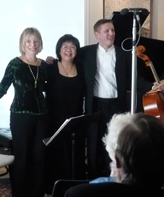
Images (a revised version of "Japanese Gardens") is the second of a series of pieces that have a common motif. Growing up in Southern California with its desert and Asian influences prompted the composer to design a garden in her house in the hills with a river of rocks and boulders surrounded by grasses and green plants. "Images" evolved out of the designing of this space. Peaceful, melodic, melancholy and richly textural, this work is suited to compliment most any program. The marvelous piano trio, Alto Polis, have taken this work on as their own and perform it beautifully in many concert venues.
Interiors (2003)
For string chamber orchestra
Duration: ca. 7:30
Published by Kenter Canyon Music (ASCAP)
Thanks to Jeannie
Pool who created the wonderful concert series, In Praise of
Music, Interiors was commissioned for the final concert of the 2002-2003
season. This work is part of a larger work-in-progress for string
orchestra. As I envision it at this time (and times always change!),
it will be the inner movement of a series of Dialogues. The mood
of the work is an outgrowth of our world situation. The opening
section engages an inverted interval that suggests memories of our
childhood. This motif weaves its way through the instruments and
settles into the middle section of triplets like children playing
hide and seek. Though the work is pensive and sometimes somber,
it also addresses the hopes for our futures and those of our children.
Interiors is published by Kenter Canyon Music (ASCAP).
Japanese Gardens
(2006)
Piano Trio for vln, cello, pn
Duration: approx 6:00
Published by Kenter Canyon Music (ASCAP)
Premiered by Barry
Socher, Violinist with the Los Angeles Philharmonic, Armen
Ksajikian, co-principal
cellist with the Los Angeles Chamber Symphony Orchestra and Bryan
Pezzone, prominent pianist in the Southern California music
scene, "Japanese Gardens" is the second of a series of pieces which
have a common motif.
Growing up in Southern California with its desert and Asian
influences prompted me to design a garden in my house in
the hills with a river of
rocks and boulders surrounded by grasses and green plants. "Japanese Gardens" evolved
out of the designing of this space. Peaceful, melodic, melancholy
and richly textural, this work is suited to compliment most
any program.
Japanese Gardens
(2006)
Piano Trio for vln, tenor, sax,
pn
Duration: approx 6:00
Published by Kenter Canyon Music (ASCAP)
Growing up in Southern California with its desert and Asian
influences prompted me to design a garden in my house in
the hills with a river of
rocks and boulders surrounded by grasses and green plants. "Japanese Gardens" evolved
out of the designing of this space. Peaceful, melodic, melancholy
and richly textural, this work is suited to compliment most
any program.
Japanese Gardens
(2006)
Piano Trio for soprano sax, cello,
piano
Duration: approx 6:00
Published by Kenter Canyon Music (ASCAP)
Growing up in Southern
California with its desert and Asian influences prompted me to design
a garden in my house in
the hills with a river of
rocks and boulders surrounded by grasses and green plants. "Japanese Gardens" evolved
out of the designing of this space. Peaceful, melodic,
melancholy and richly textural, this work is suited to compliment
most
any program.
L.A. Nuevo Tango (2006)
Duet for Saxophone and Guitar
Also Available for Saxophone and Piano! Revised Version (2012)
Also Available for Oboe and Piano! Revised Version (2015)
Duration: ca. 4'
Published by Kenter Canyon Music (ASCAP)
"A seriously wonderful disc; excellent choice of music - including great new work by Albert..."
Martin Perlich, (Author "The Art of the Interview"),former Program Director, KCSN-FM/ 88.5 Los Angeles.
"My favorite on [Tangos y Serenatas] is L.A. Tango Nuevo...particularly nice for world music radio formats..."
Hope Munro Smith, KFSR 90.7 FM, Fresno
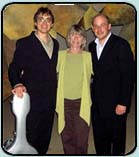 When Alan Durst and Corey Whitehead approached me to compose a piece for saxophone and guitar, I was thrilled to take on the
challenge. As a composer, I love to collaborate with wonderful musicians as my work would never be heard without their sensibilities.
Corey and Alan wanted a work that would be appealing to both audiences and musicians, and as the composer I set out to write a piece
that would suit their needs. The role of a composer includes drawing musical maps, i.e. think Mapquest and how one gets from point A
to point Zed with all the signs inbetween. A competent musician can follow the signs but it is the heart and soul of the great musician who
decides what to do with those signs, i.e.slow down, look, listen, get out and enjoy the view. When they first read through L.A. Tango Nuevo, , Corey likened the work to a
Rock/ Tango/ Aria. The work combines a rock rhythmic ostinato with elements of lyricism. The rhythmic backdrop set by the guitar from
the onset is driving; taking advantage of the guitar's percussive abilities and nuance. The soprano saxophone melody floats
above the guitar in a care-free, yet lyrical melody. The development section of the piece is reminiscent of tango through the single note
arpeggiated guitar accompaniment and melodic content of the soprano saxophone. At the return of the A section, LA Tango Nuevo
drives to the end with energy and excitment. Available on their album, Tangos y Serenatas, on Centaur.
When Alan Durst and Corey Whitehead approached me to compose a piece for saxophone and guitar, I was thrilled to take on the
challenge. As a composer, I love to collaborate with wonderful musicians as my work would never be heard without their sensibilities.
Corey and Alan wanted a work that would be appealing to both audiences and musicians, and as the composer I set out to write a piece
that would suit their needs. The role of a composer includes drawing musical maps, i.e. think Mapquest and how one gets from point A
to point Zed with all the signs inbetween. A competent musician can follow the signs but it is the heart and soul of the great musician who
decides what to do with those signs, i.e.slow down, look, listen, get out and enjoy the view. When they first read through L.A. Tango Nuevo, , Corey likened the work to a
Rock/ Tango/ Aria. The work combines a rock rhythmic ostinato with elements of lyricism. The rhythmic backdrop set by the guitar from
the onset is driving; taking advantage of the guitar's percussive abilities and nuance. The soprano saxophone melody floats
above the guitar in a care-free, yet lyrical melody. The development section of the piece is reminiscent of tango through the single note
arpeggiated guitar accompaniment and melodic content of the soprano saxophone. At the return of the A section, LA Tango Nuevo
drives to the end with energy and excitment. Available on their album, Tangos y Serenatas, on Centaur.
The wonderful saxophonist and guitarists, Doug Masek and Jon Ortiz, recently performed and recorded "L.A. Tango Nuevo" and it will be coming out soon. Also, a new version for soprano saxophone and piano was recently recorded by Doug Masek and Bryan Pezzone, piano. This version can be heard on my CD, "Reflections: Saxophones & Friends" which can be purchased here on my website! And a New version for Oboe and piano is now available!
Lament (2010)
for Alto flute and Bassoon
Also scored for Alto Flute and Bass Clarinet; English Horn and Bassoon; English Horn and Bass Clarinet; oboe and Bass Clarinet
Duration: approx 5:00
Published by Kenter Canyon Music (ASCAP)
The middle movement
of the chamber work titled "Menage a Trio". "Lament" is a stand alone work for numerous instrumental duets. The original version is for alto flute and bass clarinet, but it can also be performed on low flutes, alto flute and bassoon, viola and cello and many other beautifully matched voices. An homage to a friend who passed away suddenly, "Lament " is a heartfelt work that speaks to the melancholy loss of a loved one.
Lullaby (2007)
flute, violin, viola, cello, harp
Duration: approx 4:30
Published by Kenter Canyon Music (ASCAP)
Lullaby, the middle movement
of the chamber work titled "Between the dark and daylight".
Lullaby is
a gentle song featuring the voices of the individual instruments.
As my former musical life included being a singer, I ask
myself if each musical line can be sung and if so, then
it follows that it should sound good on an instrument.
Although I wrote the notes, the shape and intention
of the music can only come to life through the collaborative
process of the musicians interpreting what I have written
and to that end, I was extremely fortunate to have such
marvelous musicians premiere this work; Mark Carlson, flute,
Roberto Cani, violin, James Dunham, viola, David Speltz,
cello and Joann Turovsky,
harp.
Lullaby (V. 2008)
violin, cello,piano
Duration: approx 4:30
Published by Kenter Canyon Music (ASCAP)
This version of Lullaby for Piano Trio was requested by my friends from the Pennsylvania Academy of Music, The Newstead Trio, who loved the piece and asked me to transcribe a version for them. Happily, it is getting many performances and seems to be a hit with musicians and audiences alike. The MP3 version you can listen to is by the wonderful Alto Polis Trio recorded in a live performance in 2008. There is also a version for string orchestra.
Lullaby for Three (V. 2011)
c flute, viola, harp
Duration: approx 6:30
Published by Kenter Canyon Music (ASCAP)
"Lullaby for Three" is an extended version of "Lullaby" . This version is for c flute, viola and harp which I transcribed for a performance by The Debussy Trio. They performed it on a NACUSA/L.A. concert in January, 2012. This version is an extended version of the original with an upbeat middle section that features each of the beautiful instruments of the trio. The MP3 version you can listen to right now is for piano trio and is performed by the wonderful Alto Polis Trio recorded in a live performance in 2008. There is also a version for string orchestra.
Lullaby for Four (V. 2012 and 2014)
c flute, clarinet, cello and piano
Also available for violin, cello, clarinet and piano
Duration: approx 6:30
Published by Kenter Canyon Music (ASCAP)
"Lullaby for Four " is the latest version of "Lullaby". This version, for c flute, clarinet, cello and piano was requested by The Sirius Chamber Ensemble in Sydney, Australiafor an upcoming concert on April 4th, 2012. "Lullaby for Four" is an extended version of the original with an upbeat middle section that features each of the four instruments. Until I get a new mp3 version, the MP3 version you can listen to is by the wonderful Alto Polis Trio recorded in a live performance in 2008.
Mazal Tov (2001)
cl, tpt, vln, bass, pno, tenor voice
Duration: approx 5:00
Published by Kenter Canyon Music (ASCAP)
Commissioned by Dr. Simon Gamer in memory
of a friend. A Klezmer type piece, Mazal Tov is a joyful traditional
song to be performed at weddings, parties and concerts of celebratory
music. Written to be sung by the Rabbi congratulating the joyful
union of husband and wife, his piece can also be performed without
the vocal part. Not difficult and fun to play.
Menage a Trio (2010)
Three movements for flute/alto flute, clarinet/bass clarinet, bassoon
Also scored for oboe, clarinet/bass clarinet, bassoon
Duration: ca.' 12:00
Published by Kenter Canyon Music (ASCAP)
1. Seaside Sarabande |
|
| 2. Lament |
|
3. Rolling Waves |
|
"Menage a Trio" for flute, clarinet and bassoon version was premiered by Susan Greenberg, flute and alto flute, Helen Goode-Castro, clarinet/bass clarinet, and Carolyn Beck, bassoon in Santa Monica, CA on July 13, 2010
“Menage a Trio” is a work for 3 instruments that began as a series of Baroque-style Inventions. The first movement, Seaside Sarabande, is based on the Baroque fugue with the instruments joining one another in a playful dance at the seashore. The second movement, a duet, calls for the lower voices of the flute and clarinet (alto flute and bass clarinet) titled Lament to Sara (dedicated to my friend who recently passed away whose name happened to be Sara – as in Sarabande). The final movement returns to the melodic voicing of the first movement with a triplet feel describing Rolling Waves.
MIrror
Images (2002)
Transcribed for clarinet quartet
Duration: approx 4:00
Published by Kenter Canyon Music (ASCAP)
A beautiful melody with underlying
harmonies that transcend boundaries of classical and pop
music, this
piece was originally composed for saxophone quartet. The
wonderful saxophonist,
Doug Masek, first performed the piece in this orchestration
under
the title, "Four Love". I have since revised the
original to correspond with the other transcriptions of the
work.
MIrror
Images (2002)
Transcribed for saxophone quartet
Duration: approx 4:00
Published by Kenter Canyon Music (ASCAP)
A beautiful melody with underlying
harmonies that transcend boundaries of classical and pop
music, this
piece was originally composed for saxophone quartet. The
wonderful saxophonist,
Doug Masek, first performed the piece in this orchestration
under
the title, "Four Love". I have since revised the
original to correspond with the other transcriptions of the
work.
 Mirror Images (2006) Mirror Images (2006)
Transcribed for Flute Quartet
2 C Flutes, Alto Flute, Bass Flute
Duration: ca. 4'
Published by Kenter Canyon Music (ASCAP)
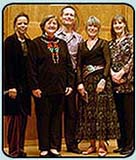
A beautiful melody with underlying harmonies that transcend boundaries of classical and pop music, this piece was originally composed for saxophone quartet. The wonderful saxophonist, Doug Masek, first performed the piece in this orchestration under the title, "Four Love". I have since revised the original to correspond with the other transcriptions of the work.
Mirror Images (2008)
Transcribed for String Quartet
Violin1, Violin 2, Viola, Cello
Commissioned by David Katz
Duration: ca. 4'
Published by Kenter Canyon Music (ASCAP)
After David Katz heard the saxophone version of "Mirror Images" up at Cal State University Fresno, he came to me at the end of the concert and asked if I would make a transcription of the work for string quartet. I was delighted to do this as I felt strongly that this lovely work works well for most any group of instruments and of course, the strings are among the most beautiful of all.
Mirror Images (2019)
Transcribed for Bassoon Quartet
3 Bassoons, 1 Contra-bassoon
Commissioned by Christin Schillinger and Ithaca College
Duration: ca. 5'
Published by Kenter Canyon Music (ASCAP)
This latest version of my MIRROR IMAGES was requested by the wonderful bassoonist, lecturer and teacher, Dr. Christin Schillinger at Ithaca College, NY. I found this version to be the most difficult to compose as the original versions for saxophones and clarinets had a wide range from the low tones up into the notes above the treble clef. Nevertheless, this version is beautiful with the rich and rangy tamber of the bassoons.
Musescapes (2009)
Three movements for Violin, 'Cello, and Piano
Duration: approx 18:00
Published by Kenter Canyon Music (ASCAP)
In three movements titled:
1. Gee Whiz |
|
"Musescapes" had its beginnings in 2005 when Carol S. Gee, a pianist/photographer with a great love for chamber music commissioned me to write a work for her amateur piano trio. At the time, I was listening to a lot of the music of Astor Piazzolla and thought it would be great fun to write a three movement work with roots in North American jazz and South American tango music. Since there was no due date for this commission, it languished between periods of composition and longer periods of working on other projects. All the time, I was mulling over titles that I thought appropriate to the material. None seemed to quite fit and, frustrated, I was at a loss as to how to proceed.
Then, The Newstead Trio, a marvelous piano trio with whom I have had a working relationship since the early 00s approached me to compose something for them in honor of the opening year of the new Philip Johnson-designed Pennsylvania Academy of Music Hall in Lancaster, PA, and the lost piece of the puzzle was put into play. Six movements AND a due date later, "Musescapes" popped into my head and seemed the perfect title for this multi-movement work. The muses were at play here, and the scapes (scenes) evolved. The first movement, titled "Gee Whiz" is a jazz-flavored work filled with whimsy and interplay of the violin and cello answering each other’s musical motifs while the piano plays mediator.
|
2. For My Mother |
|
During the composing of this work, my mother passed away, She was a professional violinist and often played chamber music in our home when I was a child. The second movement titled "For My Mother" became an homage to her. It is a loving, melancholy, melodic work.
|
3. Ode to Piazzolla |
|
My fascination for Piazzolla is clearly heard in the third movement, aptly titled “Ode to Piazzolla”. One of the wonderful things about “Musescapes” is that more pieces are in the drawer, and there will be more “Musescapes” to come! |
New York Gardens
(2010)
for clarinet, tenor saxophone and piano; also scored for alto sax, tenor sax and piano; English horn, tenor sax and piano
Duration: approx 6:00
Published by Kenter Canyon Music (ASCAP)
Growing up in Southern California with its desert and Asian influences prompted me to design a garden by my house in the hills with a river of rocks and boulders surrounded by grasses and green plants. The musical work that evolved out of designing this space was a work for violin, cello and piano titled "Japanese Gardens". When I was asked to do a version of this piece for saxophones, I immediately thought of my life in New York with its fast pace and jazzy feel, and this new piece became "New York Gardens". Scored for clarinet, tenor saxophone and piano. Also scored for alto saxophone, tenor saxophone and piano and for English horn, tenor sax and piano.
Nightdreams (2007)
flute, violin, viola, cello, harp
Duration: 7:50
Published by Kenter Canyon Music (ASCAP)
Nightdreams,
the first movement of the chamber work titled "Between
the dark and daylight". Nightdreams begins
with the descending minor third interval played
by the viola (I love inner voices) and builds
as each instrument enters to a dramatic high
pitch. It then begins to move through a kaleidoscope
of cultures. A pentatonic scale has the feeling
of Chinese
voices; tango rhythms appear to take the listener
to South American countries; snippets of other
cultures including our own Appalachian mountain
region take shape and meld into the next.
Nightfall (2002)
bassoon and piano
Duration: 6'
Published by Kenter Canyon Music (ASCAP)
The middle movement
of my sonata for bassoon and piano, "Circadia", "Nightfall" is a stand-alone piece which
is very moving and lyrical. Since the horrible events of 9/11, our
world seem to be moving with harrowing speed toward the precipice
of Armageddon. "Nightfall", is a reflective, melancholy and
brooding piece which mirrors the descent from day into night.
A lovely
addition
to any program.
Nightfall
Version for French horn and piano
Duration: 6'
Published by Kenter Canyon Music (ASCAP)
Audio sample and score to arrive soon.
Please find out more about Nightfall by reading the information
above.
Nightfall (2003)
Version for cello and piano
Duration: ca.6'
Published by Kenter Canyon Music (ASCAP)
Originally commissioned by Dr. Carolyn
Beck as the second movement of my sonata, "Circadia" for bassoon and
piano, I have transcribed this work for the extraordinary cellist,
Marek Szpakiewicz, the winner of the 2003 Mu Phi Epsilon International
Artists Competition in Cincinnati, Ohio. A DMA candidate at USC
and a student of Eleanor Schoenfeld, Marek has won numerous awards
internationally and he has chosen "Nightfall" as one of his pieces
he will perform nationally over the next two years. Since the horrible
events of 9/11, our world seem to be moving with harrowing speed
toward the precipice of Armageddon. "Nightfall", is a reflective,
melancholy and brooding piece which mirrors the descent from day
into night. Marek will record "Nightfall" in the near future
so stay tuned!
PasaTango (2008)
for C flute, guitar
Duration: ca. 4:30
Published by Kenter Canyon Music (ASCAP)
An adaptation of LA Tango Nuevo, the rhythmic backdrop set by the guitar from the onset is one that is driving; taking advantage of the guitar's percussive abilities and nuance. I thought the flute would sound beautiful as it floats above the guitar in a care-free, yet lyrical melody. The development section of the piece is reminiscent of tango through the single note arpeggiated guitar accompaniment and melodic content of the alto flute. At the return of the A section,Pasa Tango drives to the end with energy and excitement.
Piccolodeon
(2011)
for piccolo and piano
Duration: ca. 3:00
in honor of The 15th Anniversary of Chamber Music Palisades
Published by Falls House Press/T. Presser
The fabulous Susan Greenberg and Delores Stevens, co-founders and music directors of the wonderful chamber music series, Chamber Music Palisades, asked me to compose a short work in celebration of the 15th Anniversary of their Series. Of course, I was delighted and said yes! Since the piccolo does not seem to have the number of works specifically written for this tiny instrument, I decided to give it a go and had lots of fun writing for the Little Instrument with the BIG Voice! Wanting something playful, I thought of the sound of the Nickelodeon at the Carousel in Central Park and on the Santa Monica Pier and chose this sound from the piano to accompany the piccolo. The piece gets off to a slow start but quickly picks up speed and each instrument tries to outdo the other until the surprise ending! Lots of Fun to play!
Poetry
(2011)
for Baritone saxophone
and harp (or Piano)
Also Available for Bassoon and Piano through TrevCo
Duration: ca. 8:45
Commisioned by and for Wayne Leechford
Published by Kenter Canyon Music (ASCAP)
The combination of baritone saxophone and harp
started as a challenging endeavor when first thinking
about writing for this instrumentation. Commissioned
by Wayne Leechford, "Poetry" for Baritone Saxophone
and Harp began as I was reading the poems of Edgar
Allan Poe, specifically the marvelous poem, “Annabel
Lee”. The cadence of the words seemed to work well
as a musical line, and the baritone sound of the
saxophone spoke to the darkness and depth of love
and despair of the poetry. Combining the textures
of the saxophone and harp was a challenge that
delighted me as I pondered these two distinct textural
sounds that may not have been combined before in
duet form. The work begins with the harp evocative
of the love and the sea so eloquently described
in Poe’s writing. The saxophone is the lover despairing
of losing his love, the beautiful Annabel Lee.
Reflections
(1994)
soprano saxophone and piano
Duration: approx 3:10
Published by Kenter Canyon Music (ASCAP)
Reviews: Concert Master Series
performance on April 29, 2001, presented by the Arrowhead Arts Association.
Reviewer: Glenn Tinturin
"This Sunday's performance by classical saxophonist Douglas
Masek and pianist Ayke Agus proved to be a
truly inspiring event... The highlight for me
was a piece written for Mr. Masek by Adrienne
Albert called Reflections. This
had a hauntingly beautiful melody which Masek
played with a silken tone, while performing effortless
leaps in melodic range."
"Clear jazz influence dominated Albert's lovely Reflections".
The Herald. Port Elizabeth, South Africa Oct 10,2007
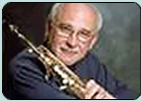 "Reflections" has had numerous performances around the
world. A beautiful melody with underlying harmonies that transcend
boundaries of classical and pop music, this piece was originally
composed for saxophone quartet. The wonderful saxophonist, Doug
Masek, asked me to transcribe it for soprano saxophone and piano
so that he could tour with the piece. Recorded on his CD, Distant
Memories, this piece is a welcome addition to any clarinet or "Reflections" has had numerous performances around the
world. A beautiful melody with underlying harmonies that transcend
boundaries of classical and pop music, this piece was originally
composed for saxophone quartet. The wonderful saxophonist, Doug
Masek, asked me to transcribe it for soprano saxophone and piano
so that he could tour with the piece. Recorded on his CD, Distant
Memories, this piece is a welcome addition to any clarinet or
Saxophone program. Due to the popularity of the work, I have been
asked to transcribe "Reflections" for other instruments
including cello and piano, violin and piano, oboe and piano, and clarinet and piano. Please see below.
"Reflections" has been performed many times around the world. Recorded by Doug Masek
on his CD, Distant Memories. This piece is a welcome addition to
any clarinet or Saxophone program.
Reflections (1994)
clarinet and piano
Duration: approx 3:10
Published by Kenter Canyon Music (ASCAP)
Please see comments from Reflections above.
Performed by Jim Williams, clarinet, and Linette Lind, piano in Holly Springs, N.C. 2009
Reflections (1998)
Transcribed for ob and pn
Duration: approx 3:10
Published by Kenter Canyon Music (ASCAP)
Please see comments from Reflections above.
Reflections
(2002)
Transcribed for violin and piano
Duration: approx 3:10
Published by Kenter Canyon Music (ASCAP)
Please see comments from Reflections above.
Performed by Grant Ho, violinist and Julia Greer, pianist in several
chamber
concerts.
Reflections (2002)
Transcribed for cello and piano
Duration: approx 3:10
Published by Kenter Canyon Music (ASCAP)
Please see comments from Reflections above.
Remembrances (2019)
for flute and piano (or harp)
Duration: ca. 5:30'
Published by Kenter Canyon Music (ASCAP)
Commissioned by the Los Angeles Chapter of Mu Phi Epsilon in honor of their 100th birthday celebration. Premiered by Susan Greenberg, flute, and Delores Stevens, piano, both of whom are members of the Los Angeles Chapter. Susan Greenberg also performed with harpist, Cristina Montes Mateo in other concerts.
Sam's Dance (1995)
for soprano saxophone and piano
Duration: approx 4:00
Published by Kenter Canyon Music (ASCAP)
Sam's Dance was originally conceived as I awaited my father who was undergoing foot surgery. He had the lithe
physique
of an athlete whose only sport was Walking. Sam religiously walked
five miles everyday of his life. While sitting in the hospital
waiting
for his results, images of my father walking with a cane paraded
as a three-legged waltz. The bravado of the opening and closing
sections are bookends surrounding the melancholy melodies that characterized
the character of a man constantly searching for lost dreams,
hopes and loves..
Sam's Dance
for Woodwind Quintet (rev. 2019)
For flute, clarinet, oboe, bassoon and French horn
Duration: approx 6:00
Published by Kenter Canyon Music (ASCAP)
A delightful and charming work for WWQ that has had numerous performances including several by the Calico Winds. Originally written for soprano saxophone and piano, ths WWQ version engages audiences and performers alike. Good for programming for children as well as adult audiences.
Sam's Dance (1995)
transcribed for clarinet and piano
Duration: approx 4:00
Published by Kenter Canyon Music (ASCAP)
Sam's Dance
(1995)
transcribed for flute and piano
Duration: approx 4:00
Published by Kenter Canyon Music (ASCAP)
Sam's Dance
(1995)
transcribed for oboe and piano
Duration: approx 4:00
Published by Kenter Canyon Music (ASCAP)
Serenade
(2020)
for solo bassoon
Duration: approx 4:00
"Serenade" was composed during a one week On-line Zoom Workshop writing for Solo Bassoon during the COVID-19 pandemic in July of 2020.
Sunswept (2006)
for C flute and piano
Duration: approx 6:00
Published by Kenter Canyon Music (ASCAP)
Originally written for horn and piano as the last movement of my Global Warming Sonata and then transcribed for clarinet and piano, Sunswept originated with a call from my friend and fellow Mu Phi member,
Susan Dietz, asking if Windswept could be played with flute so that she and
her husband, John, could play it together. In reworking the piece, I
realized the sonorities of the flute and piano would work beautifully
with this piece. Sunswept is an exciting, playful, lyrical and dynamic interchange between the
instruments. The piano is an equal partner to the flute in this work. Click on the following link to listen to the superb flutist, Aleksandr Haskins and pianist, Mary Au perform "Sunswept".
Swing Shift (2013)
for Bassoon and piano (Optional Drum Set)
Duration: approx 8:30
Published by Kenter Canyon Music (ASCAP) Also available through TrevCo.
Swing Shift came about through a conversation with bassoonist, Christin Schillinger, who had been listening to songs from the 50s and 60s sung by the marvelous singers of the era, Ella Fitzgerald, Sarah Vaughn among others. We agreed that a new work for her (which she will premiere at the 2013 IDRS in Redlands) should have the feel of that era. Once I came upon the title, Swing Shift, the piece almost wrote itself. It can be performed with or without a drummer!
Tango Alono (2020)
for Oboe Solo
Duration: approx 5:00
Published by Kenter Canyon Music (ASCAP)
"Tango Alono" was conceived during a wonderful online-oboe workshop given by composer, Jenni Brandon,
during the COVID-19 lockdown in July of 2020. Originally, I thought the title of this work would be "Alone" as,
sadly, this terrible virus has forced school music programs and professional organizations to rethink the way musicians are able to play together for the foreseable future. Over the week of the class, the piece morfed into a
kind of tango feel. Hence, the title, "Tango Alono".
The Day Before (2019)
for Alto flute and Piano
Duration: approx 5:30
Published by Kenter Canyon Music (ASCAP)
Commissioned by flutist, Wendy Stern, "The Day Before" brings back memories of yesterdays. Starting with a reflection of Beethoven, the work is melodic and thoughful, with flickers of memories past including the Beatles "Yesterday".
Three for Two (2010)
Three movements for alto flute and contrabass flute (or bass flute); for bass flute (or C flute) and contrabass flute (or bass flute)
Duration: approx 11:00
Published by Kenter Canyon Music (ASCAP)
1. Dark and Light |
|
|
Purchase all 3 movements |
2. Lament for Sara |
|
|
|
3. Sassy |
|
|
|
Commissioned by noted low flutes expert, Peter Sheridan, Three for Two was composed expressly for Peter and his cohorts in flute crimes:-) these three duos for the low flute family were premiered at the San Diego Flute Festival in April, 2010 and performed at the NFA Convention in August. "Three for Two" . These works can be heard on Peter Sheridan's wonderful CD, Monologues and Dialogues on MOVE Records.
Two to Tango
(2012)
for violin and cello
Duration: ca. 4:30
Published by Kenter Canyon Music (ASCAP)
An upbeat, charming tango for violin and cello. Premiered at MiMoDa with cellist Maksim Velichkin and violinist Radu Pieptea. In August of 2013, "Two to Tango" was also performed in the beautiful setting of La Senora Research Institute in the Santa Monica Mountans by violinist Alan Busteed and cellist, Ruslan Biryukov in a program titled "Tango for a Summer Eve" with the music of Piazzolla among others. A piece for students as well as professionals. Sound files and score samples will be put up soon!
UnCivil Wars (2012)
for flute/piccolo, horn in f, and piano
Duration: ca. 7:40
Published by Kenter Canyon Music (ASCAP)
"UnCivil Wars" is the first movement of a three movement work-in-progress titled "War Stories" commissioned by the wonderful Zinkali Trio. They premiered this movement at the International Horn Symposium 44 at the University of Texas, Denton, TX in May of 2012. In this first movement, the horn portrays the heroic soldier committed to protecting the lives and honor of the innocent civilians (the flute and piccolo). The opening is the horn playing the traditional Taps, a Civil War song, in the original major key. The piccolo joins in to promote the peace, and then the piano, Suddenly the mood dramatically shifts . The music darkens, the piano depicting the army supporting, defending and protecting the innocent civilians, battling the imaginary forces. Throughout the movement, there is the Taps motif struggling to maintain the peace only to lose with untold loss of life and limb. A tragic end in the name of Civility.
Visions of Grace ( 2015)
for low flute quintet: 2 alto, 2 bass, contra-bass flute
Duration: ca. 5:30
Published by Kenter Canyon Music (ASCAP)
May also be purchased through FluteWorld
"Visions of Grace", commissioned by the wonderful low flutes expert, Peter Sheridan, is a beautiful, lyrical work based on the universal theme of Amazing Grace but with surprising twists and turns slighly bringing in other folk tunes from around the globe. The colors of the low flutes are brought out in this collage of songs. "Visions of Grace" was premiered at the NFA Convention in August, 2015 in Washington, D.C.with Peter Sheridan, alto, Emily Senchuk, alto2, Chris Potter, bass1, Wendy Stern, bass 2, and Paige Dashner Long, contra-bass. A stellar group of musicians!
War Stories (2012-14)
Three movements for flute/piccolo, French horn, piano
Duration: approx 16:00
Published by Kenter Canyon Music (ASCAP)
1. UnCivil Wars |
|
|
Purchase all 3 movements |
2. The Good War |
|
|
|
3. Homeward Bound |
|
|
|
Commissioned by the wonderful ,Zinkali Trio, "War Stories" was composed over a period of three years with the first movement, "UnCivil Wars" being performed in 2012 at the International Horn Symposium 44 at the University of Texas, Denton, TX. In this first movement, the horn portrays the heroic soldier committed to protecting the lives and honor of the innocent civilians (the flute and piccolo). The opening is the horn playing the traditional Taps, a Civil War song, in the original major key. The piccolo joins in to promote the peace, and then the piano, Suddenly the mood dramatically shifts . The music darkens, the piano depicting the army supporting, defending and protecting the innocent civilians, battling the imaginary forces. Throughout the movement, there is the Taps motif struggling to maintain the peace only to lose with untold loss of life and limb. A tragic end in the name of Civility.
The second movement, "The Good War" refers to WW2 and uses several motifs of WW2
songs that will engage the players and the audience. The final movementm "Homeward Bound" is a lyrical piece that brings the fighting men and women home to their loved ones and families. It is in homage to the brave young men and women who have fought so valiantly in the name of our country. Some come home whole, some in pieces, and some in boxes.
Wind Song (v. 2012)
for French horn and piano
Duration: ca. 9:30
Published by Kenter Canyon Music (ASCAP)
"Wind Song" is a transcription of "Wind Tides" that has recently been magnificently performed by
Michael Thornton, principal horn of both the Colorado Symphony and the Los Angeles Chamber Orchestra (LACO) and Margaret McDonald, pianist, at the University of Colorado-Boulder in Grusin Hall. The piece works beautifully for the Horn in F in addition to the trombone. . For more information about this piece, please see the notes below pertaining to "Wind Tides"
Wind Tides (2008)
for trombone and piano
Duration: ca. 9:30
Published by Potenza (ASCAP)
American Record Guide - Jan/Feb 2013 Issue
"Wind Tides" is a beautiful, nine-minute study in a mostly melancholy mood that ranges from wistful to restless to agitated." Kilpatrick
"Wind Tides" was the 1st Prize Winner of the Wright State University Trombone competition in 2016. Megumi Kanda, Principal Trombone of the Milwaukee Symphony Orchestra performed it at Wright State University Trombone and Horn conference in Dayton, OH. Megumi performed "Wind Tides" again at the Trombone Conference in Redlands, CA in June 2016. In 2020, "Wind Tides" was performed by the Los Angeles Philharmonic's Principal Trombonist, David Rejano, in recital.
When Andrew Malloy commissioned me to compose a work for trombone, I was both thrilled and terrified to write a work for this marvelous musician and remarkable instrument as, although I have written for the big instrument in my orchestral works, it seemed even more daunting to write for an instrument that is not necessarily thought of as a "solo" instrument (at least to other than brass players!). So, with Andy’s help (and it is always wonderful when a composer has the luxury of collaborating with a great player), I learned about the different sonorities, positions, and challenges of this instrument. "Wind Tides" for trombone and piano is like a mini-concerto in a single movement with a fairly lengthy cadenza and is basically in ABA form. The title comes from the obvious reference to the breath required for this instrument and from the ebb and flow of the music. "Wind Tides" is the opening track on Andy's double CD, PAPER CLIPS, released on Navona Records.
Windswept (2002)
Transcribed for clarinet, piano
Duration: approx 6:00
Published by Kenter Canyon Music (ASCAP)
Originally conceived as the final movement to Climate Control, Windswept
has been reworked for clarinet and piano and stands on it's own
as a playful and lyrical interchange between the instruments. The
piano has a cascading motif of triplets throughout which represents
the wind sweeping across the plains and over the sea.
Windswept (2002)
Version for Cello and Piano
with lyrical cello cadenza
Duration: 6'
Published by Kenter Canyon Music (ASCAP)
After transcribing "Windswept" for clarinet
and piano, I realized that it would make a wonderful cello and piano
piece. The agility, tonal colors and range of the cello make it
the perfect partner to the piano. Windswept is a playful and lyrical
interchange between the instruments. The piano has a cascading motif
of triplets throughout that represents the wind sweeping across
the plains and over the seas. Windswept is published by Kenter
Canyon Music (ASCAP).
Winter's Breath
(v. 2008)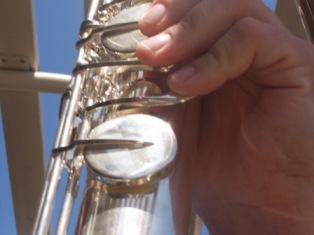
ContraBass Flute and piano
Also Bass Flute and piano
Duration: approx 4:00
Published by Kenter Canyon Music (ASCAP)
An adaptation of Winter Solace, Winter's Breath is a brooding, lyrical
homage to the darker places in each of us. The breathy, sensual voice
of the contrabass flute seemed a perfect fit for the moodiness of the
melody and interweaving of the harmonies which never go where you think
they will. Filled with clashing accidentals, Winter's Breath exudes
mysterious tonal colors which are perfectly suited for this unique instrument. Thanks to the wonderful low flutes specialist, Peter Sheridan , Winter's Breath is being introduced into the mainstream of the flute repetoire.
Winter Solace
(2002)
Alto Saxophone, piano
Duration: approx 4:00
Published by Kenter Canyon Music (ASCAP)
Written for my dear friend, Doug Masek who recorded it for his 2007 CD, Saxophone Alternative on Centaur, Winter Solace is a brooding, lyrical
homage to the darker places in each of us. The breathy, sensual voice
of the alto saxophone seemed a perfect fit for the moodiness of the
melody and interweaving of the harmonies which never go where you think
they will. Filled with clashing accidentals, Winter Solace exudes
mysterious tonal colors which are perfectly suited for the alto sax, an
instrument that is underused and generally misunderstood in the
"classical" world.
|